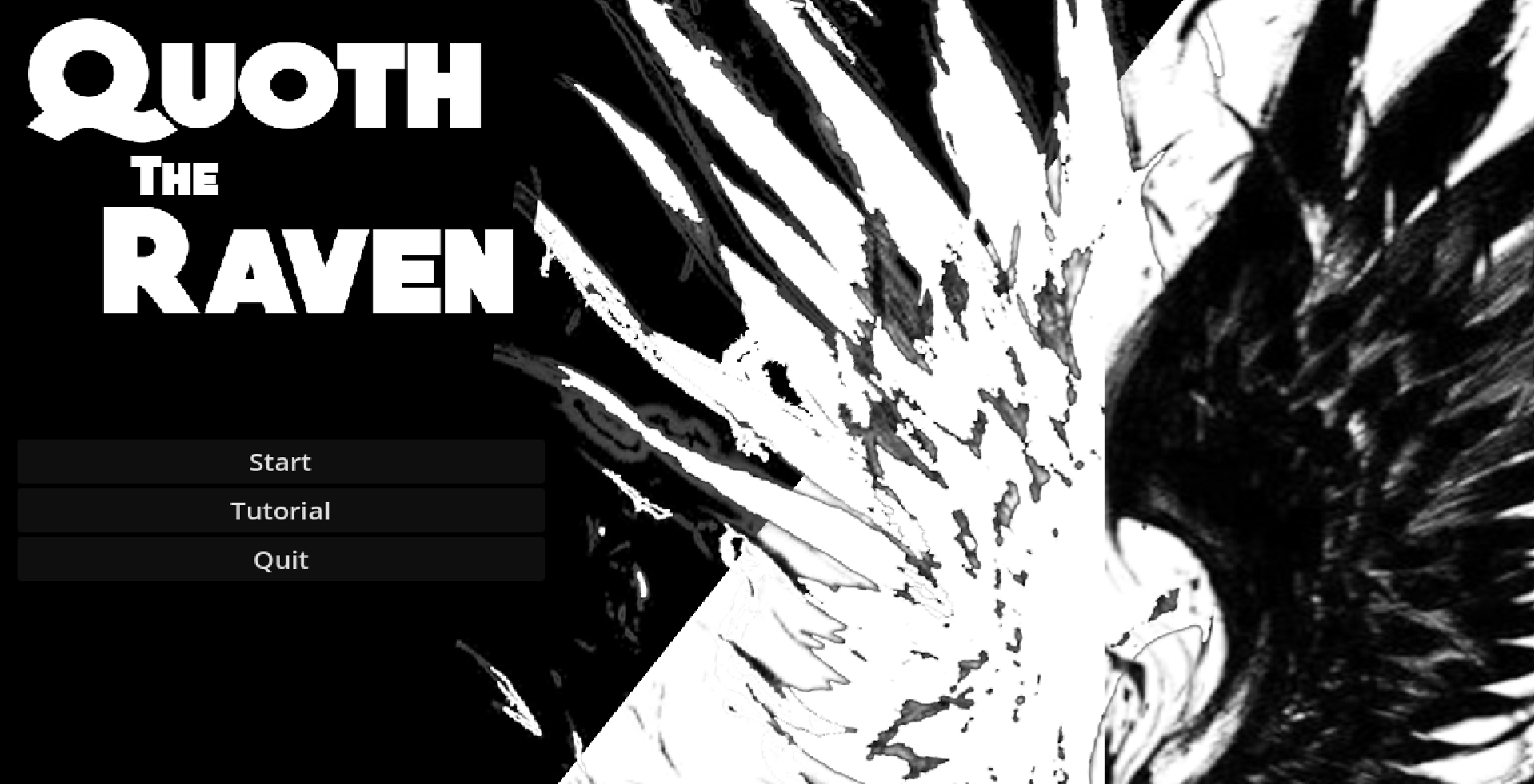
Main menu for Quoth the Raven: A game that I helped develop with a team of 4 other members in Godot, using C# and custom art
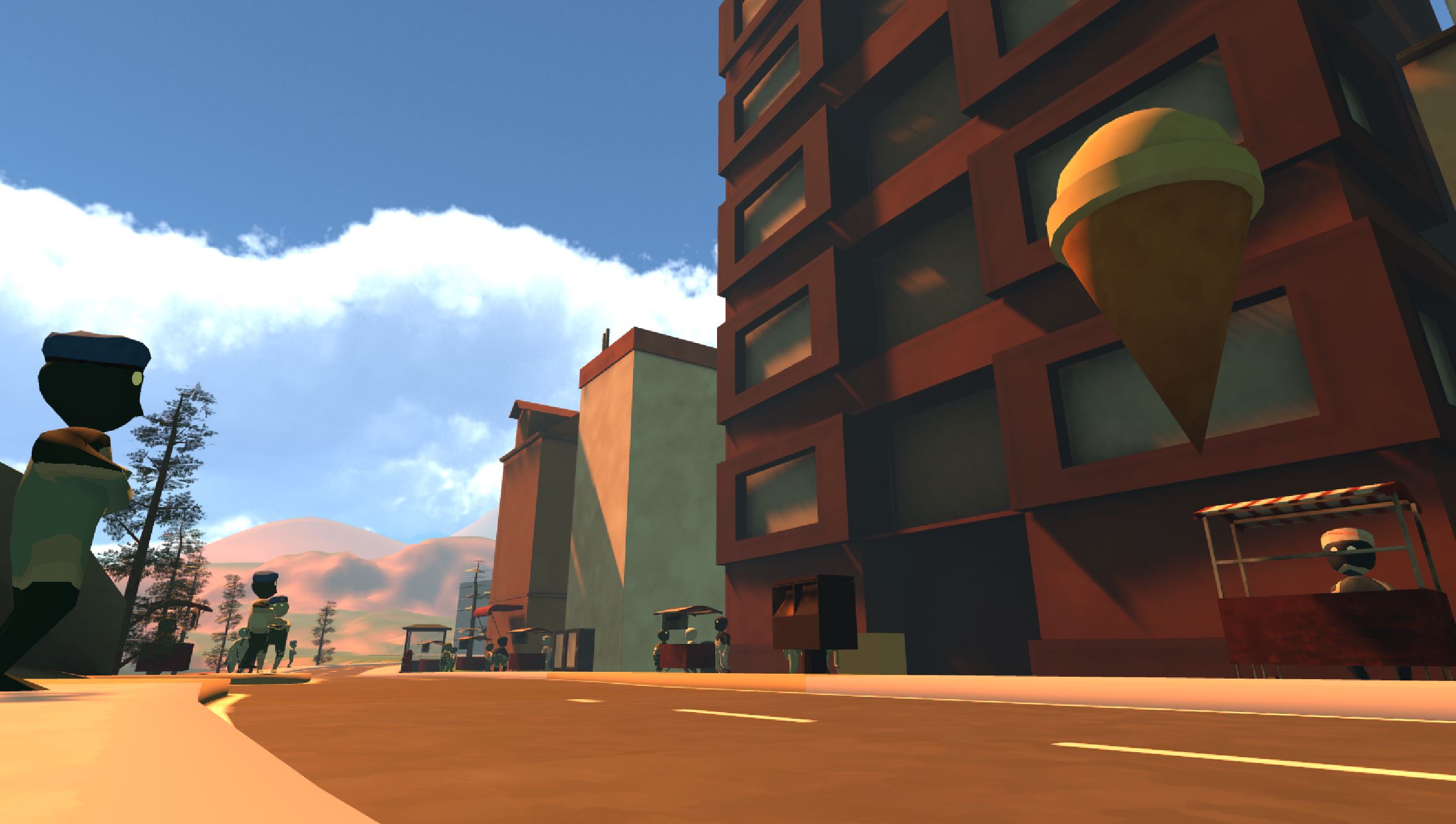
 In 2024, from May 20th to August 1st, I was a part of an entrepreneurial co-op at RIT, where we had to build a playable game prototype,
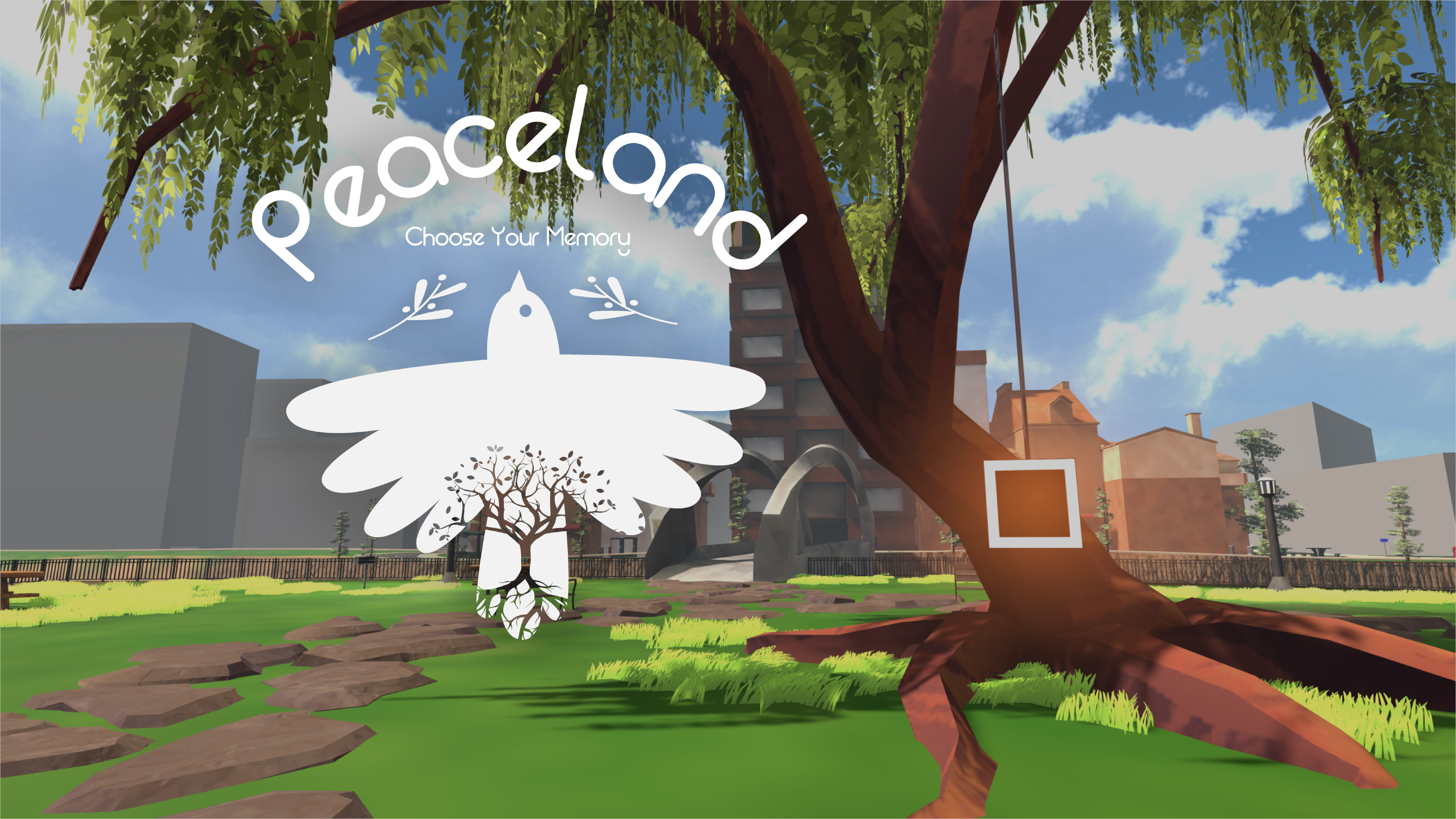
called "Peaceland". The goal of Peaceland is to encourage people in post-conflict areas to be more empathetic to create peace, as well as
help show the player that the choices they make can have significant impacts on others. Working with some fellow game developers, I helped
work on the level design on the game, as well as creating some 3D assets to use. I also helped iron out any bugs that were found, and helped
to implement cutscenes and conversations. I was also part Rigger/Animator, along with being a Game Developer, and helped rig the
default character model, create some animations, and implement them into the game. I also did some voice acting and created some basic
dialogue for one of the fictional languages in the game, as well as some other background talking noises, although they have been archived and
are unused now. I have continued on the project as it turned into a Vertically Integrated Project (VIP) during the following fall 2024 semester.
I have helped with doing research on other games that have similar narratives, controls, and other gameplay/narrative elements, in order to see
how we should continue developing Peaceland, and what we can apply to the game. Then during the spring 2025 semester, development started on
creating a simple prototype for one gameplay scene in 2D, and will be used as a guideline for future work on developing Peaceland.
The link below goes to the RIT webpage where you can learn more about Peaceland, and how it has developed over time.
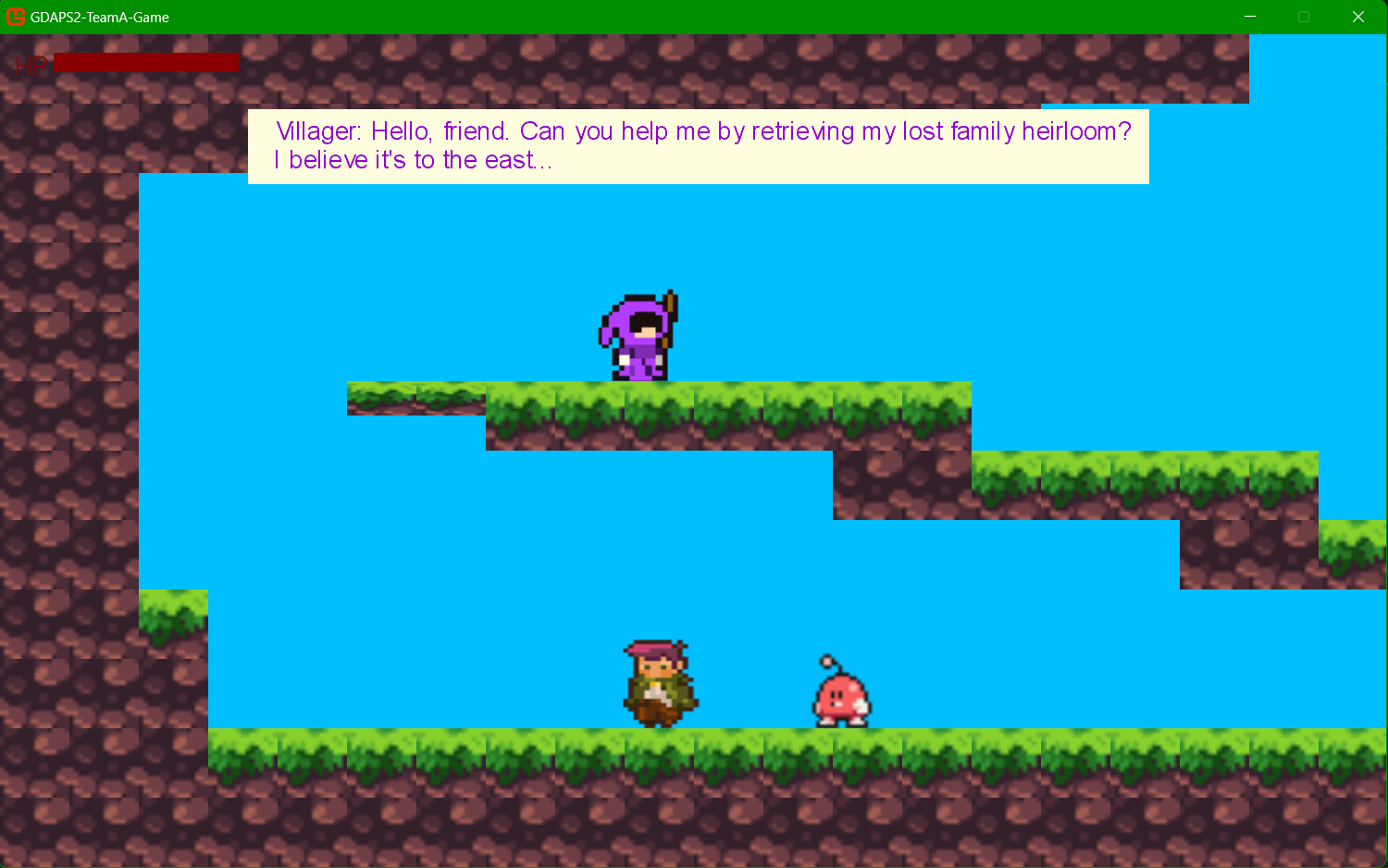
Quoth the Raven is the first game I ever made in Godot, although I did use the .NET version so I could continue using C# to code, and not
spend time learning a new language while developing the game. I worked in a team of 4 other people during my Game Design & Development 2
class during the fall semester of 2024. I primarily worked on the code and the design of the game, as well as creating a few temporary art
assets between some of the development sprints, most of which were replaced by official assets later. I primarily worked on implementing
player movement, controls, and other smaller mechanics/methods that deal with the player, and I also worked on implementing powerups that
would affect certain stats that the player has, such as sprint speed, health, and damage. I helped to work on a rudimentary inventory
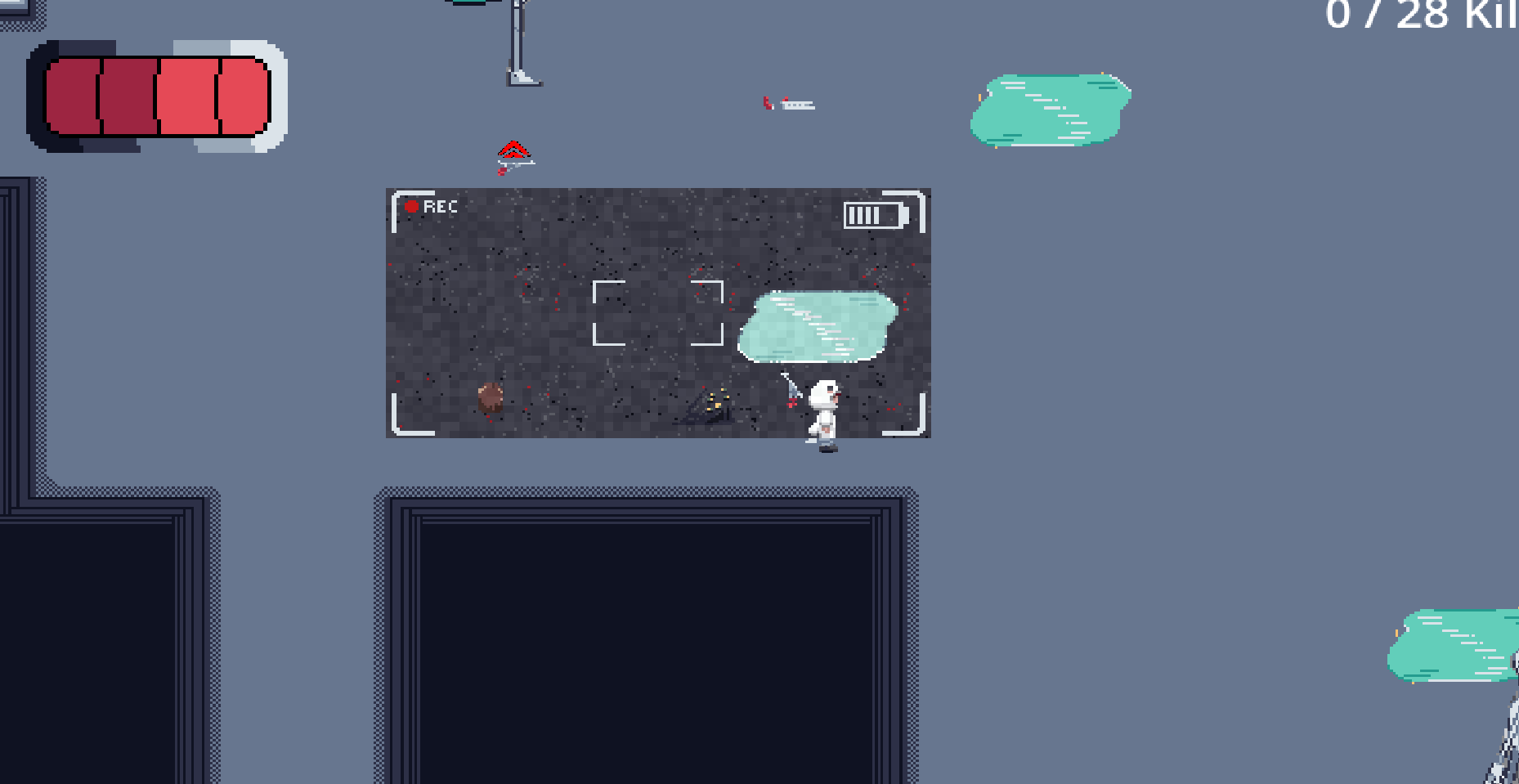
to view your stats and the current weapon you are holding, and I helped to work on creating a basic win condition that keeps track of
the number of enemies killed out of the total, and a win screen once all the enemies were defeated. I also worked on smaller changes
to the code, and worked on fixing any bugs that would suddenly appear. The link below goes to the official web page for the game, where you
can learn more about the game and its current progress, and there is also a link to an itch.io page where you can download the latest version
of the game and play it for yourself (there is still an issue where some hallways line up incorrectly and may block player movement, as well
as the fact that there are doorways in most rooms that aren't blocked off, where the enemies can wander out of and escape, making it near
impossible to actually win at the moment).
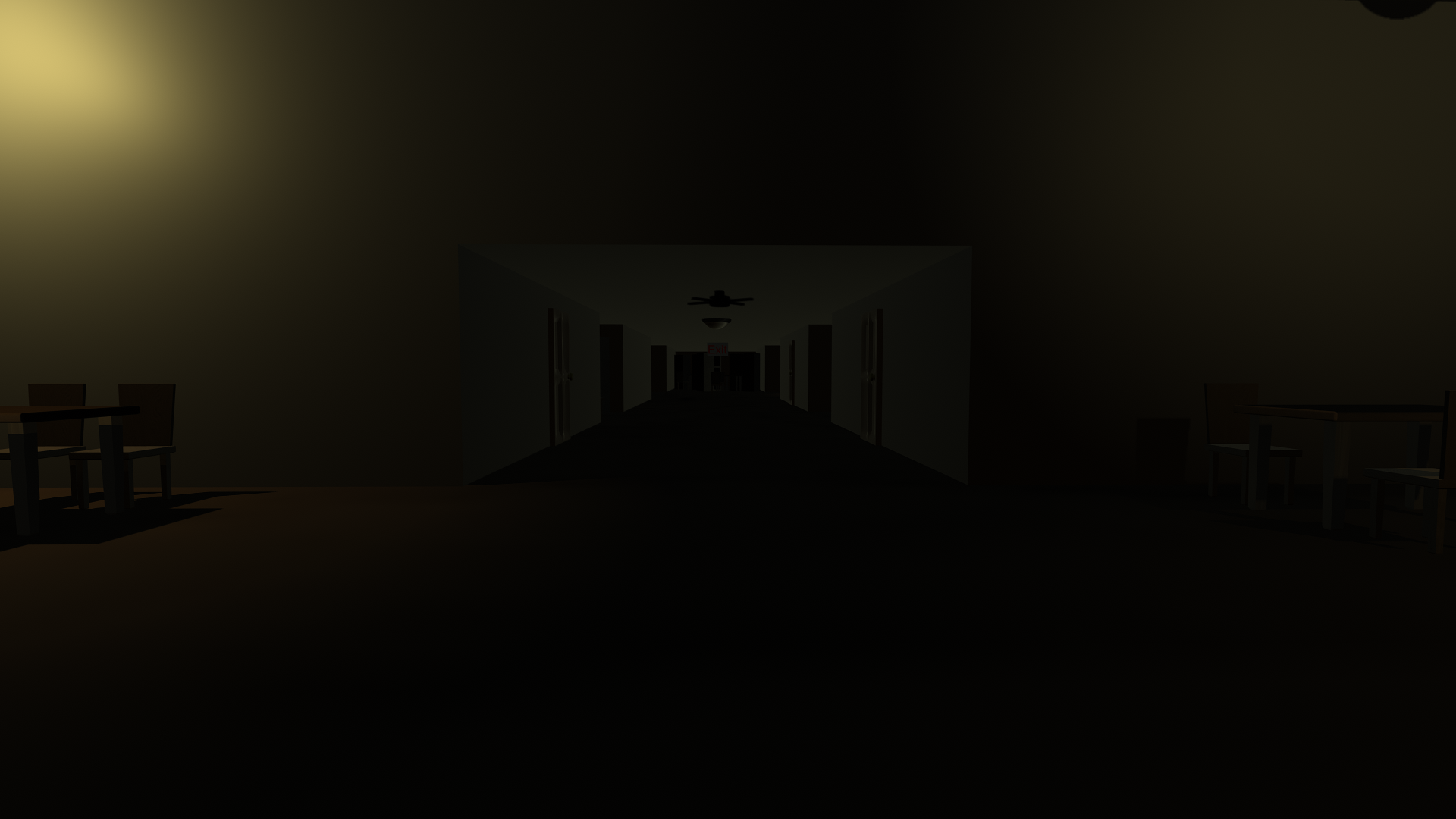
A game I made by myself for my 3D Animation and Asset Production class during my sophmore year.
This was made from scratch, and used a basic texture plane for the floor and grayboxing for the walls and ceiling, but I made custom props
in Maya to put in, such as chairs, tables, exit signs, and ceiling fans that featured a simple animation of constantly spinning slowly.
This was also the first 3D game I ever made.
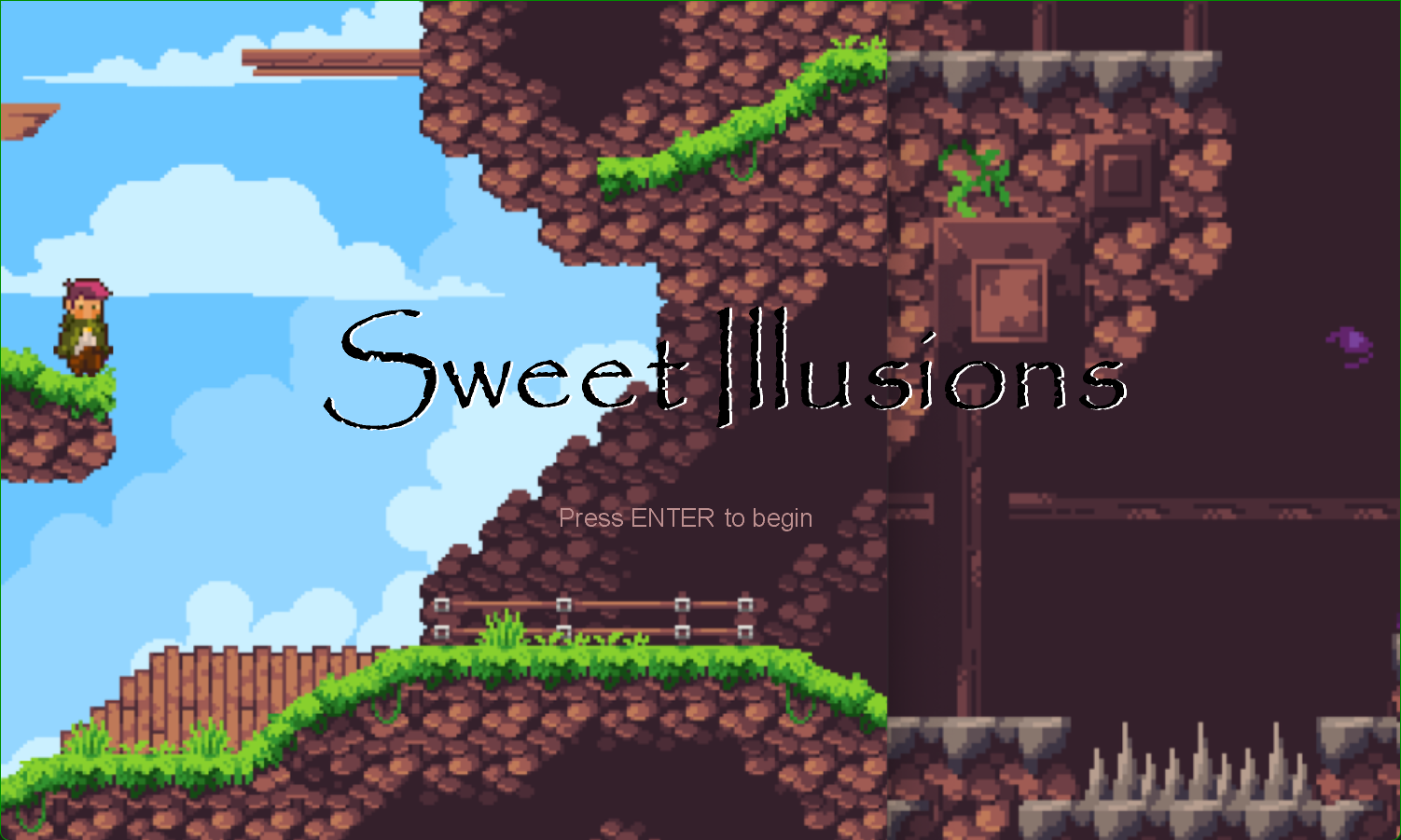
A game I made by myself for my 2D Animation and Asset Production class during my freshman year.
The game was based on a template for making a 2D platformer in Unity, and all of the preexisting textures and animations had to be
replaced with custom made ones, as well as some of the sounds. This was also my very first project made in Unity.
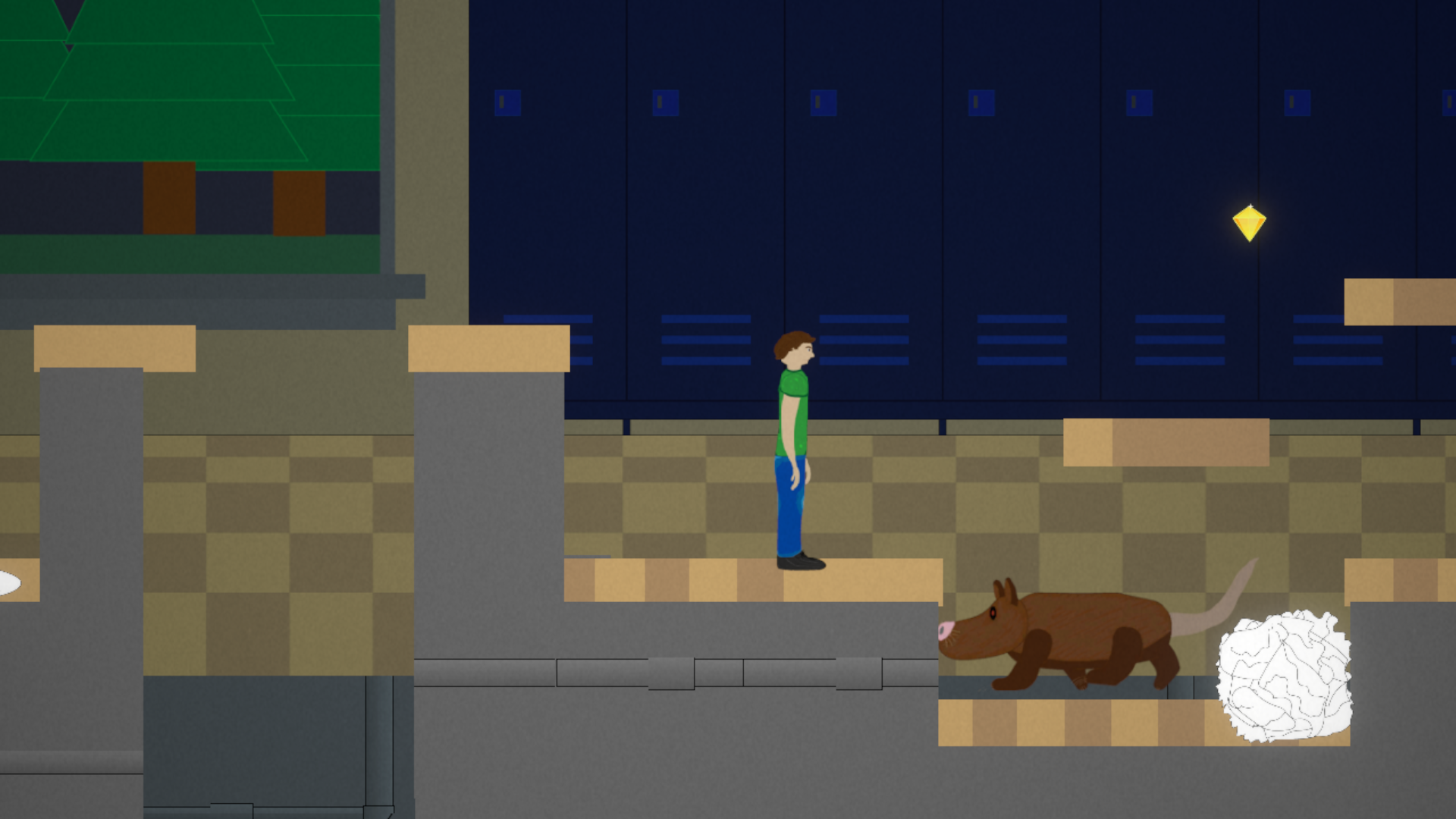
A game I made with a team of 4 other people during my Game Development & Algorithmic Problem Solving 2 class during my freshman year.
I primarily helped by adding sound and music to the game, making the prototype for the player jumping and falling mechanics,
implementing a Finite State Machine (FSM) for the state of the game world, and also polishing some of the code to be more presentable.
This was the first 2D game I ever made, as well as the first official game I have ever made.
In 2024, from May 20th to August 1st, I was a part of an entrepreneurial co-op at RIT, where we had to build a playable game prototype,
called "Peaceland". The goal of Peaceland is to encourage people in post-conflict areas to be more empathetic to create peace, as well as
help show the player that the choices they make can have significant impacts on others. Working with some fellow game developers, I helped
work on the level design on the game, as well as creating some 3D assets to use. I also helped iron out any bugs that were found, and helped
to implement cutscenes and conversations. I was also part Rigger/Animator, along with being a Game Developer, and helped rig the
default character model, create some animations, and implement them into the game. I also did some voice acting and created some basic
dialogue for one of the fictional languages in the game, as well as some other background talking noises, although they have been archived and
are unused now. I have continued on the project as it turned into a Vertically Integrated Project (VIP) during the following fall 2024 semester.
I have helped with doing research on other games that have similar narratives, controls, and other gameplay/narrative elements, in order to see
how we should continue developing Peaceland, and what we can apply to the game. Then during the spring 2025 semester, development started on
creating a simple prototype for one gameplay scene in 2D, and will be used as a guideline for future work on developing Peaceland.
The link below goes to the RIT webpage where you can learn more about Peaceland, and how it has developed over time.
Quoth the Raven is the first game I ever made in Godot, although I did use the .NET version so I could continue using C# to code, and not
spend time learning a new language while developing the game. I worked in a team of 4 other people during my Game Design & Development 2
class during the fall semester of 2024. I primarily worked on the code and the design of the game, as well as creating a few temporary art
assets between some of the development sprints, most of which were replaced by official assets later. I primarily worked on implementing
player movement, controls, and other smaller mechanics/methods that deal with the player, and I also worked on implementing powerups that
would affect certain stats that the player has, such as sprint speed, health, and damage. I helped to work on a rudimentary inventory
to view your stats and the current weapon you are holding, and I helped to work on creating a basic win condition that keeps track of
the number of enemies killed out of the total, and a win screen once all the enemies were defeated. I also worked on smaller changes
to the code, and worked on fixing any bugs that would suddenly appear. The link below goes to the official web page for the game, where you
can learn more about the game and its current progress, and there is also a link to an itch.io page where you can download the latest version
of the game and play it for yourself (there is still an issue where some hallways line up incorrectly and may block player movement, as well
as the fact that there are doorways in most rooms that aren't blocked off, where the enemies can wander out of and escape, making it near
impossible to actually win at the moment).
A game I made by myself for my 3D Animation and Asset Production class during my sophmore year.
This was made from scratch, and used a basic texture plane for the floor and grayboxing for the walls and ceiling, but I made custom props
in Maya to put in, such as chairs, tables, exit signs, and ceiling fans that featured a simple animation of constantly spinning slowly.
This was also the first 3D game I ever made.
A game I made by myself for my 2D Animation and Asset Production class during my freshman year.
The game was based on a template for making a 2D platformer in Unity, and all of the preexisting textures and animations had to be
replaced with custom made ones, as well as some of the sounds. This was also my very first project made in Unity.
A game I made with a team of 4 other people during my Game Development & Algorithmic Problem Solving 2 class during my freshman year.
I primarily helped by adding sound and music to the game, making the prototype for the player jumping and falling mechanics,
implementing a Finite State Machine (FSM) for the state of the game world, and also polishing some of the code to be more presentable.
This was the first 2D game I ever made, as well as the first official game I have ever made.
During the fall of 2025, I took PRFL.378 Composing for Video Games, where I learned how to compose music loops for games using a few techniques to help them not seem repetitive. Loops would be a few measures long, and be something that could easily be repeated. A couple techniques would be using horizontal resequencing to randomly switch between entirely different music loops, and then vertical layering to add randomness in variations of a single game loop.
This project was a culmination of previous assignments, by including the main loop of our 3 chosen game states in the last assignment and adding additional layers that could be switched on and off randomly. This would allow for loops in game music to not seem repetitive if they switched layers every now and then. I chose to include my loop for combat game music here, as it is the game state loop that I am the most fond of. It includes all the layers active at once first, then layers 1-2, layers 1-3, and layers 2-3. The core initial layers are at the bottom, showing how the layers are combined to create new variations of the same game state.
The final thing we learned was to compose game music that worked in time with a video clip of a game of our choice. Using a game that we chose, we had to compose music that would change between different sections based on certain actions taken during the game or specific events that the player triggered. My game clip was from Halo: Reach and featured the beginning gameplay of the mission Tip of the Spear. My goal was to emulate the tone and feel of the original music that plays during the mission, with the music being split into 4 sections. These sections names help identify where in the video they start playing, which should be fairly easy to distinguish when they each start. The final video with the gameplay and my music is below the audio files, and helps viewers to feel how the 4 music sections work together to create a seamless experience that is unique and familiar to the original music.